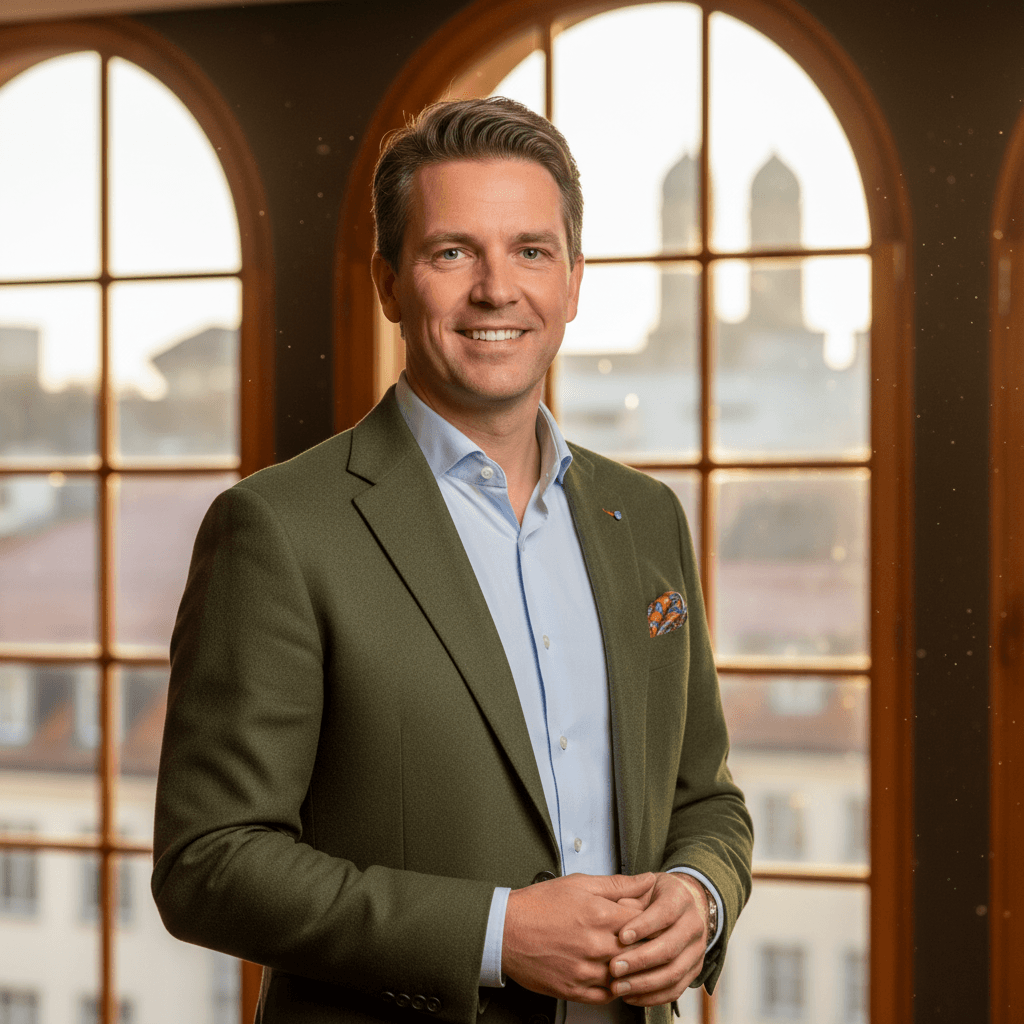
Richard(43)
Utrecht → München
I had a consultancy firm in Utrecht for eight years, specialized in supply chain management. My biggest clients were in southern Germany: BMW, Siemens, Bosch. I flew to Munich every week and at some point realized it was smarter to establish a business there. Closer to the client, lower flight costs, and the German market is enormous.
The first choice was the legal form. In Germany the GmbH (Gesellschaft mit beschränkter Haftung) is the equivalent of a Dutch BV. You need at least €25,000 in starting capital, of which half must be deposited at incorporation. That sounds like a lot, but it's comparable to startup costs in the Netherlands. The alternative is the UG (Unternehmergesellschaft), a kind of mini-GmbH with just €1 starting capital, but it's taken less seriously by German business partners.
Setting up the GmbH took six weeks. First have a Gesellschaftsvertrag (articles of association) drafted by a lawyer, then go to the Notar for notarial certification. Then registration at the Handelsregister through the Amtsgericht. After that, registration at the Finanzamt for a Steuernummer, at the IHK (Industrie- und Handelskammer) and at the Berufsgenossenschaft (professional association for occupational accident insurance). Total incorporation costs including Notar, lawyer and registration: about €4,500.
The Gewerbe registration — registering your business — is done at the Gewerbeamt. It's relatively simple and costs about €50. But don't underestimate the Finanzamt questionnaire: the Fragebogen zur steuerlichen Erfassung is an 8-page document about your expected revenue, costs and profit. Fill it in realistically, because the Finanzamt bases your preliminary tax assessment on it. In the first year I estimated too optimistically and received an enormous Vorauszahlung (preliminary assessment) that nearly strangled my cash flow.
German business culture is more formal than Dutch. Meetings start on time — not five minutes late. Emails begin with "Sehr geehrte" and end with "Mit freundlichen Grüßen." Germans value titles: "Herr Doktor" is not a joke. But once you adapt, they are loyal business partners. My revenue doubled in two years because German clients prefer long-term relationships over constantly switching suppliers.
Munich is expensive — don't let anyone tell you otherwise. Rents are the highest in Germany, a Maß Bier at Oktoberfest costs €15 and a simple Brezel at the bakery is €1.50. But the quality of life is exceptional: the Alps an hour's drive away, the Englischer Garten in the middle of the city, and the Biergärten in summer. My advice: come with a solid business plan, a good Steuerberater and at least six months of financial buffer.
Highlights
- GmbH incorporation costs ~€4,500 with minimum €25,000 capital
- Gewerbe registration at the Gewerbeamt costs just €50
- Fill Fragebogen zur steuerlichen Erfassung realistically
- German business culture is formal but yields loyal clients
Other stories

Marco
Venlo → Düsseldorf
As a nurse I had been commuting across the border for years. When I decided to actually move to Düsseldorf, the real paperwork began.

Niels
Amsterdam → Berlijn
Amsterdam rent prices drove me away. Berlin offered a startup job, an affordable apartment and a vibrant nightlife.
Dennis & Laura
Arnhem → Kleve
With three children we moved from Arnhem to Kleve. A bigger house, Kindergeld and a Grundschule around the corner — but the German school system took some getting used to.