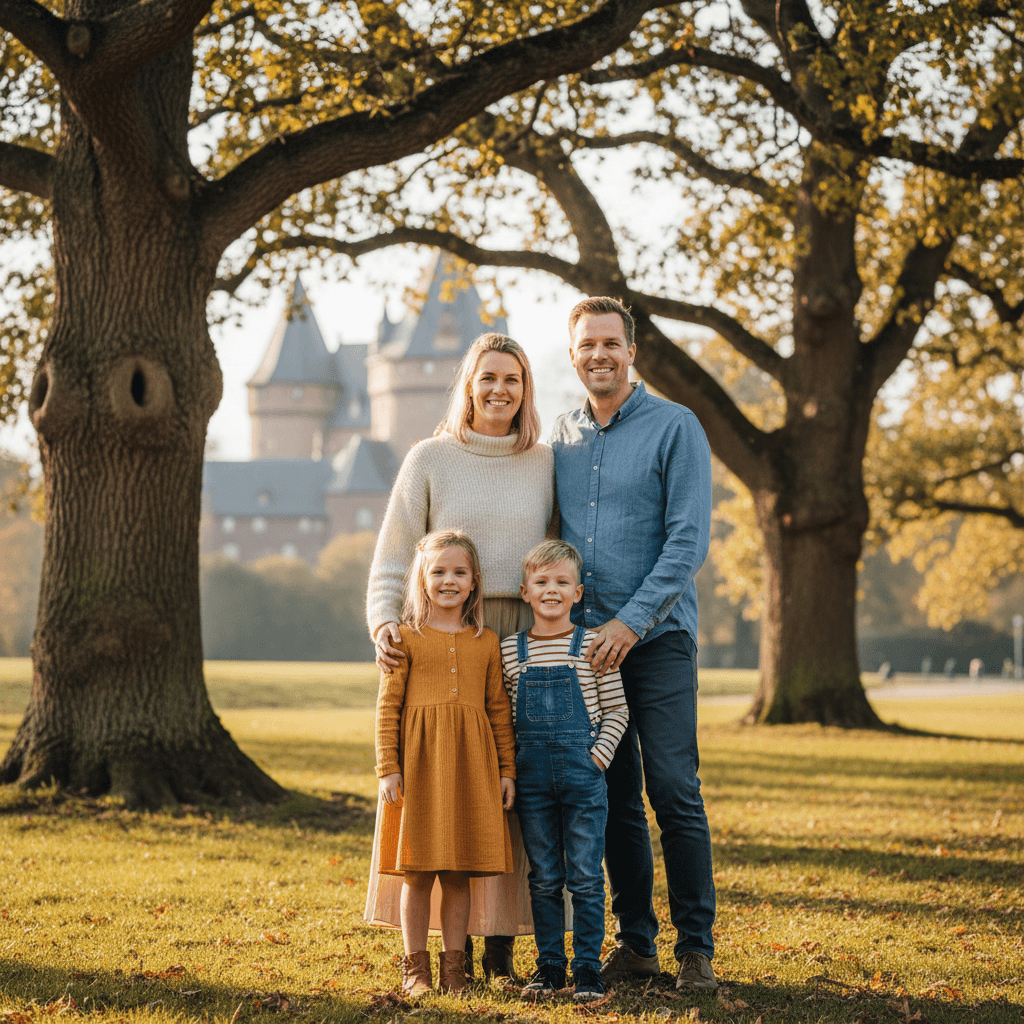
Dennis & Laura(38)
Arnhem → Kleve
Laura and I lived in Arnhem for ten years. Nice, but too expensive for a family with three children. A terraced house easily cost €450,000, and with three kids in daycare we were spending more on childcare than on the mortgage. A colleague who lived in Kleve told me how different things were just across the border. We went to have a look and were sold within a month.
In Kleve we bought a detached house with garden for €280,000 — unaffordable in Arnhem. The Grunderwerbsteuer (transfer tax) in North Rhine-Westphalia is 6.5%, higher than in the Netherlands, but the house prices more than compensate. We financed through a German bank, the Sparkasse. The mortgage rate was comparable to the Netherlands, but the Notar (notary) handles everything — and charges a fixed percentage of the purchase price.
The Kindergeld was a pleasant surprise. In Germany you receive €250 per child per month, regardless of income. With three children that's €750 per month — €9,000 per year. In the Netherlands the child benefit was considerably lower. You apply at the Familienkasse, and after a few weeks it's deposited monthly.
German school was the biggest adjustment for the children. The Schulsystem works differently: after Grundschule (grades 3-6) children are divided into Gymnasium, Realschule or Hauptschule. As Dutch people we found that early selection unsettling. Our eldest, Sem, went to the Grundschule in Kleve. He didn't speak a word of German, but the school offered Förderunterricht (extra language lessons). After six months he was bilingual.
Integration takes deliberate effort. We joined the local Sportverein — an institution in Germany. The kids play football there, Laura does yoga, and I play on a recreational team. Through the Verein we've made more German friends than through any integration program. It also helps that Kleve is right on the border: we drive to Arnhem in 20 minutes for a birthday or groceries at Albert Heijn.
My advice to Dutch families: Germany just across the border is ideal. Affordable houses, good education, Kindergeld and you're still close to family. The only downside? The Mülltrennung. Germans take waste separation deadly seriously — and after an angry letter from the Hausverwaltung, we now know that too.
Highlights
- Kindergeld: €250 per child per month, regardless of income
- Detached house with garden for €280,000 in Kleve
- Grundschule offers Förderunterricht for non-German speaking children
- Sportverein is the best way to integrate in Germany
Other stories

Marco
Venlo → Düsseldorf
As a nurse I had been commuting across the border for years. When I decided to actually move to Düsseldorf, the real paperwork began.

Niels
Amsterdam → Berlijn
Amsterdam rent prices drove me away. Berlin offered a startup job, an affordable apartment and a vibrant nightlife.

Richard
Utrecht → München
Starting a GmbH in Munich sounded like a dream. The reality was a paper jungle of Handelsregister, Gewerbe and Finanzamt — but it was worth it.