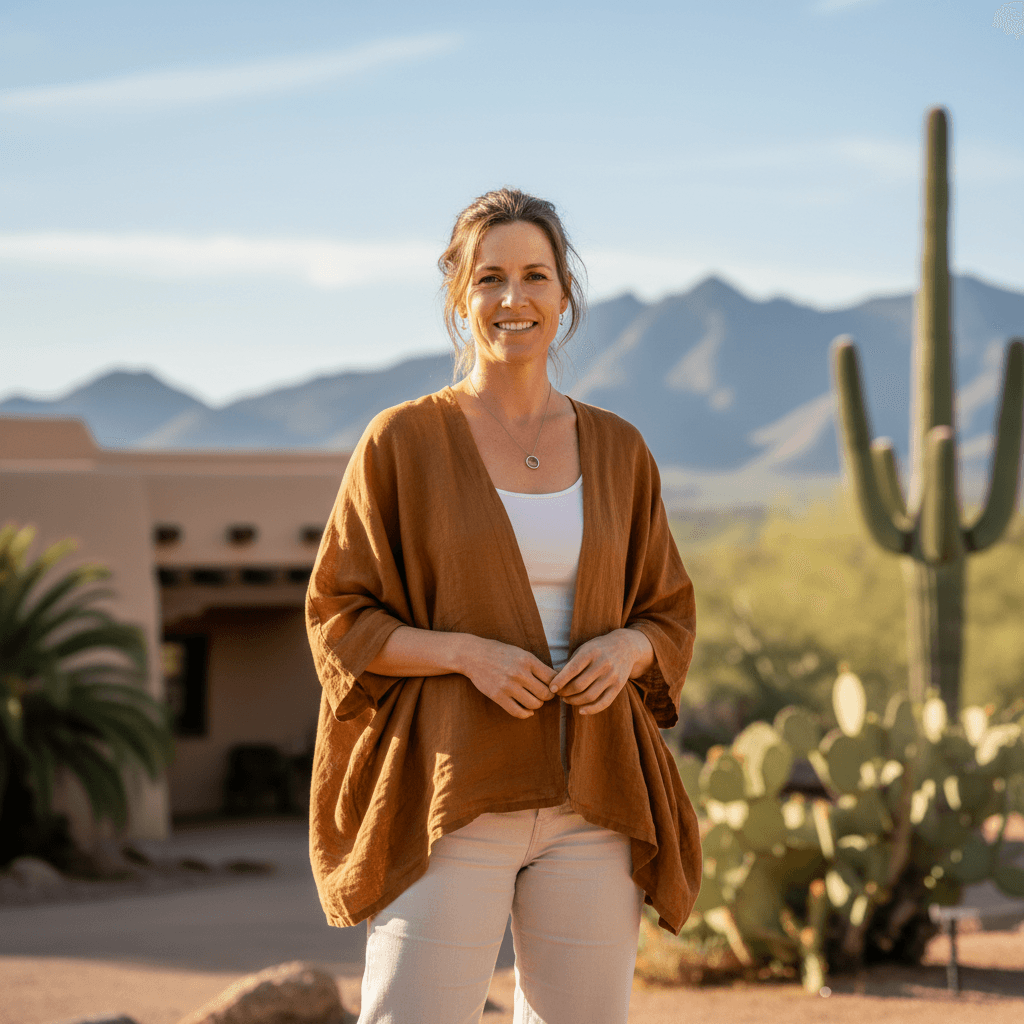
Sophie(43)
Den Bosch → Scottsdale, Arizona
After twenty years as a yoga teacher in Den Bosch, I felt the need for change. The Dutch yoga market is saturated and the overhead -- high rent, social charges, VAT -- makes it hard to make ends meet. The DAFT visa (Dutch American Friendship Treaty) gave me the opportunity to start a business in the US with a minimum investment of $4,500. I chose Scottsdale for the climate, the affluent population and the enormous demand for wellness services.
I filed the DAFT application from within the US on a B-1 visa. My business plan described a boutique yoga studio focusing on hot yoga and mindfulness retreats. I opened a business bank account at Chase Bank (which is difficult as a foreigner without credit history -- I had to deposit $1,500) and rented a space in a strip mall for $2,800 per month. Total startup costs were $35,000: furnishing, licenses, marketing and three months rent as buffer.
Arizona is entrepreneur-friendly. State income tax is low (2.5% flat rate), there's no franchise tax and regulation for small businesses is minimal. I registered my LLC online with the Arizona Corporation Commission for $50 -- comparable to the Chamber of Commerce in the Netherlands, but faster and cheaper. The biggest difference: in the US as an entrepreneur you're fully responsible for your own retirement, health insurance and disability. There's no social safety net.
Healthcare costs were the biggest shock. As a self-employed entrepreneur I buy my insurance on the ACA marketplace. My Bronze plan costs $410 per month with a $7,000 deductible. That means I pay the first $7,000 in medical costs entirely out of pocket. In the Netherlands I had basic insurance of €130 per month with €385 deductible. The difference is astronomical. I've learned to keep an emergency fund of at least $10,000 aside for unexpected medical costs.
My studio is profitable after one year. Scottsdale attracts affluent clients willing to pay $25-30 per class -- double what I could charge in Den Bosch. Retreats are my biggest revenue source: a weekend retreat in Sedona (two hours drive) brings in $15,000 per group. The desert landscapes are perfect for outdoor yoga. What I miss: Dutch directness, cycling culture and the tax authority that neatly sends you a summary. Here you track everything yourself: quarterly estimated taxes, sales tax, self-employment tax.
I renew the DAFT visa every two years. At renewal I must demonstrate that my business is growing and "not marginal." No problems so far. My advice to Dutch entrepreneurs looking at the US: DAFT is a golden opportunity, but don't underestimate healthcare costs and the lack of social safety net. Maintain a buffer of at least six months of business expenses, get good insurance and hire an accountant who knows both Dutch and American tax rules. The freedom is worth it -- but it comes with responsibility.
Highlights
- DAFT visa: start yoga studio with $4,500 minimum investment
- Arizona: 2.5% flat income tax, minimal regulation for small businesses
- ACA marketplace: Bronze plan $410/month with $7,000 deductible
- Quarterly estimated taxes + self-employment tax: track everything yourself
Other stories

Wouter
Amsterdam → San Francisco, Californie
Through an H-1B visa I landed at a tech giant in San Francisco. The salary is high, but the bureaucracy and healthcare costs are a world apart.

Martijn
Rotterdam → New York City, New York
As finance director I was transferred to headquarters in Manhattan. The L-1 visa was fast, but FATCA and double taxation made things financially complex.

Femke
Utrecht → Austin, Texas
With an E-2 investor visa I started a sustainable fashion brand in Austin. Texas has no income tax, but American business culture required adjustment.