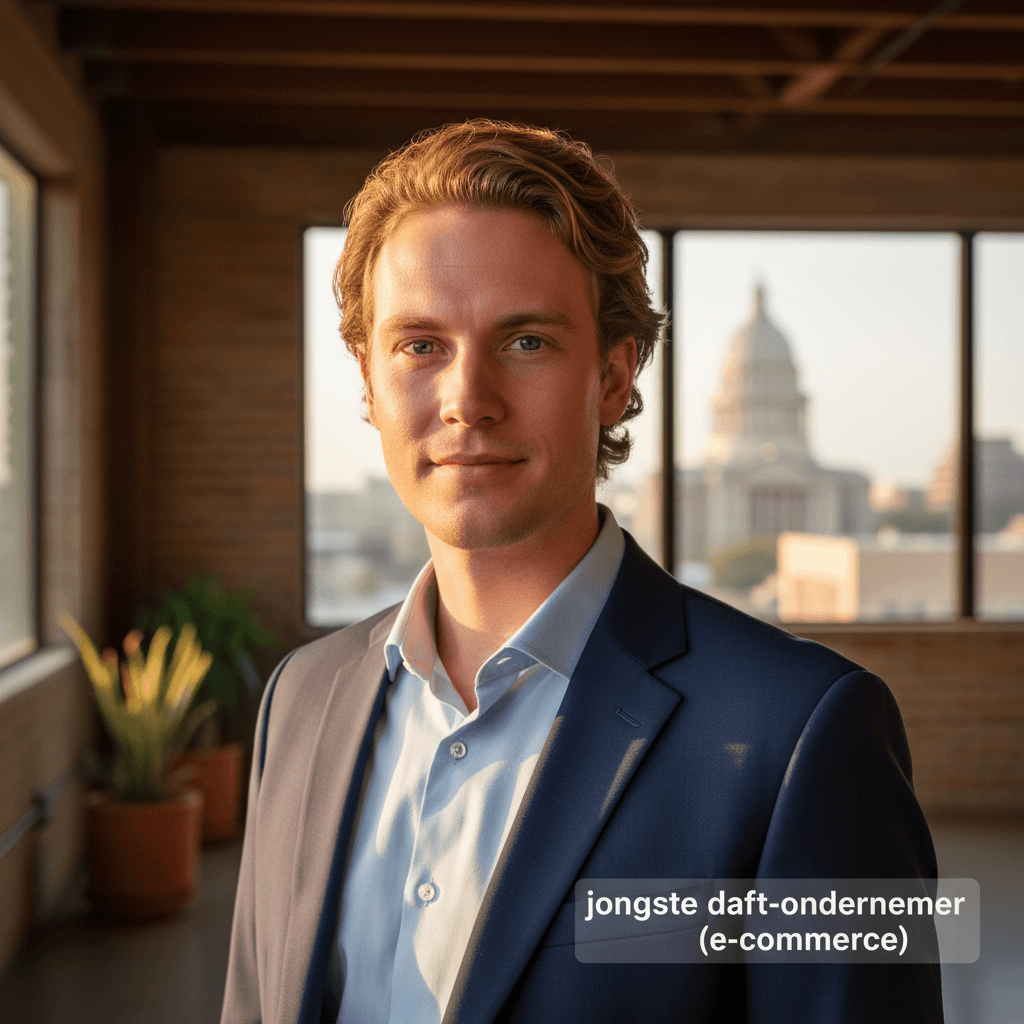
Stijn(22)
Enschede → Austin, Texas
Right after my HBO degree in International Business in Enschede, I knew I didn't want an office job. I had already been running a webshop selling Dutch design products internationally for two years. The DAFT visa seemed too good to be true: for $4,500 any Dutch citizen can start a business in the US. I flew to Austin on a B-1 visa, opened a bank account at a credit union (the only one that accepted a 22-year-old foreigner), deposited my investment and filed the DAFT application.
The beginning was raw. I rented a room in a shared house in East Austin for $900 per month. My "office" was a table in a coffee shop. My only income came from Shopify sales. The first three months were financially critical: I lived on $1,200 per month, ate mostly tortillas with beans and learned what "food insecurity" means in a country without welfare benefits. In the Netherlands I always had unemployment insurance as a safety net; here there's nothing.
Austin's startup scene saved me. Through Capital Factory (a co-working space and incubator) I met other young entrepreneurs. American networking culture is more aggressive than Dutch: you pitch yourself at every coffee. I learned to perfect my elevator pitch and to shamelessly self-promote -- something that feels unnatural as a Dutch person. After four months I had my first American B2B client: a boutique hotel in Austin that wanted to purchase my Dutch design products.
Taxes as a DAFT entrepreneur are confusing. As an LLC you pay "pass-through" tax: profits are taxed as personal income. Texas has no state income tax, but you do pay federal self-employment tax (15.3% for Social Security and Medicare) on top of federal income tax. Quarterly estimated taxes must be paid four times per year. Miss a deadline and penalties follow. I use TurboTax Self-Employed at $120 per year. A real accountant ($2,000+/year) I couldn't afford the first year.
Health insurance was my biggest financial nightmare. As a 22-year-old without an employer I qualified for a subsidized plan through the ACA marketplace thanks to my low income. My Bronze plan cost $45 per month after subsidy, but with an $8,000 deductible. That means: pay the first $8,000 yourself. When I sprained my ankle at a soccer game, the X-ray and urgent care visit cost $1,200. In the Netherlands that would cost €0 after my deductible.
After two years my e-commerce business generates $95,000 in revenue per year and I've hired two freelancers. The DAFT visa has been renewed. I'm the youngest Dutch DAFT entrepreneur I know in Texas. My advice to young Dutch people: the DAFT visa is the cheapest way to realize your American dream. But be honest about the risks: no social safety net, no healthcare security, no parents around the corner. You have to be willing to live on a minimum for months. If you can handle that, the reward is priceless: freedom, experience and a story nobody can take from you.
Highlights
- DAFT at age 22: $4,500 investment, zero social safety net
- Self-employment tax 15.3% (Social Security + Medicare) on top of income tax
- ACA marketplace: Bronze plan $45/month after subsidy, but $8,000 deductible
- From $0 to $95,000 revenue in two years from a coffee shop
Other stories

Wouter
Amsterdam → San Francisco, Californie
Through an H-1B visa I landed at a tech giant in San Francisco. The salary is high, but the bureaucracy and healthcare costs are a world apart.

Martijn
Rotterdam → New York City, New York
As finance director I was transferred to headquarters in Manhattan. The L-1 visa was fast, but FATCA and double taxation made things financially complex.

Femke
Utrecht → Austin, Texas
With an E-2 investor visa I started a sustainable fashion brand in Austin. Texas has no income tax, but American business culture required adjustment.