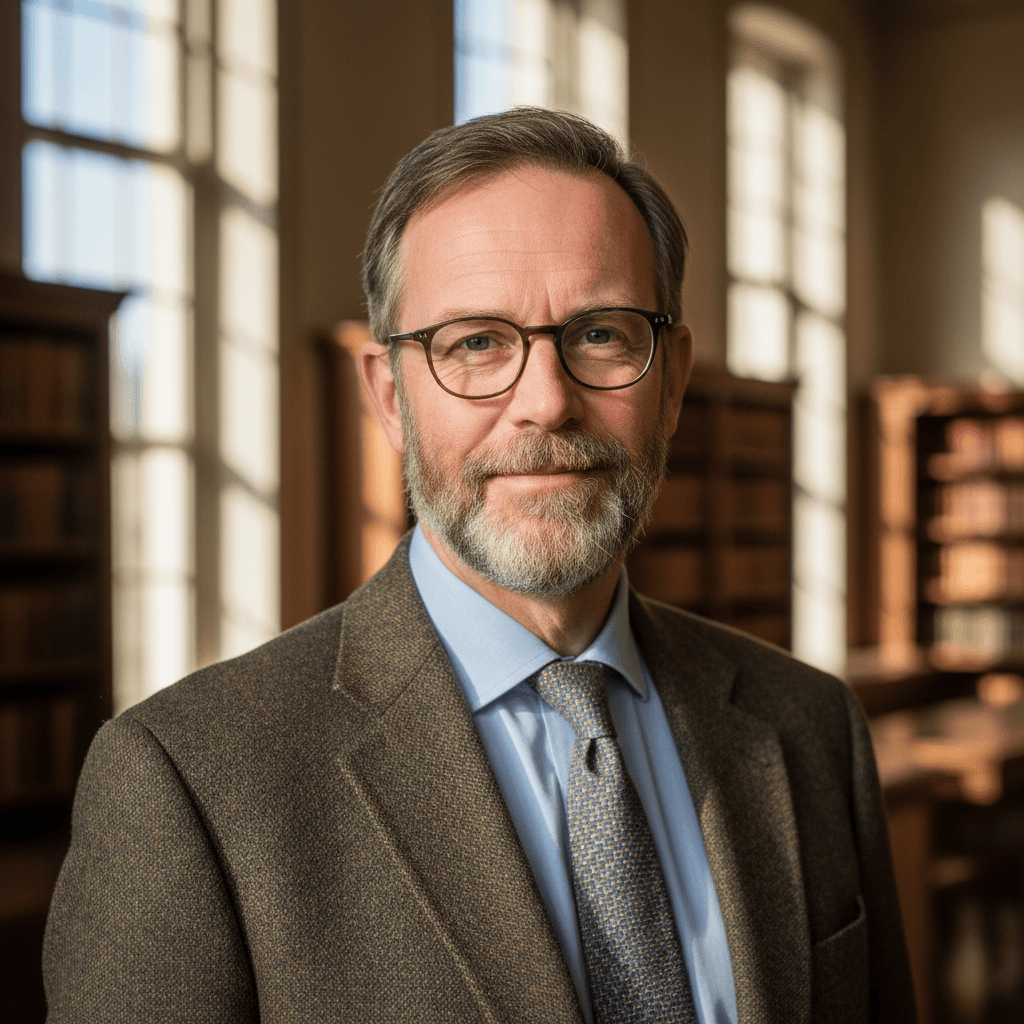
Jan-Willem(55)
Delft → Hamburg
For fifteen years I was an associate professor in maritime engineering at TU Delft. The publication pressure, temporary contracts and political atmosphere were exhausting. When a W2-Professur was advertised at the Universität Hamburg — my exact specialization — I applied. After a Berufungsverfahren of eight months (an extensive selection process with trial lectures, committee meetings and external reviews) I was appointed.
The German professor system differs fundamentally from the Dutch. A W2-Professur is a permanent appointment with a salary of about €6,000 gross per month, plus Familienzuschlag if you're married or have children. The W-Besoldung (salary scale for professors) is lower than what you'd earn in industry, but job security and academic freedom compensate. In the Netherlands as an associate professor I had a comparable salary but much less autonomy.
The Anmeldung as a professor was streamlined by the university's Welcome Centre. They arranged my appointment at the Bürgeramt, helped with the Steuer-ID and advised on the Krankenkasse. As a Beamter (civil servant) I was entitled to private Krankenversicherung (PKV) with Beihilfe — a system where the state reimburses 50% of your healthcare costs and you take out private supplementary insurance for the rest. That costs me €280 per month and the coverage is excellent.
Academic culture in Germany is more hierarchical than in the Netherlands. Students address me as "Herr Professor Doktor" — in Delft they just said "Jan-Willem." The Lehrstuhl (chair) is its own little kingdom: I have my own budget, my own doctoral students and largely determine my own research agenda. The flip side: the administrative burden is enormous. Applying for Drittmittel (external research funding) at the DFG (Deutsche Forschungsgemeinschaft) is an art in itself.
Hamburg as an academic city is underrated. The Universität Hamburg is an Exzellenzuniversität with strong research groups. The city itself offers a unique combination of harbor, culture and science. My research on autonomous shipping fits perfectly with Hamburg's maritime tradition. The collaboration with the Fraunhofer-Institut and local shipping companies gives my research practical relevance I never had in Delft.
After three years I feel at home at the Universität Hamburg. The Forschungsfreiheit (research freedom) is unmatched — nobody dictates my research agenda. The Lehrfreiheit (teaching freedom) means I can design my own courses. And the Beamtenstatus provides a security unthinkable in the Dutch university system with flexible contracts. My only complaint: Konferenzbeiträge (conference registrations) must be approved by three committees months in advance. German thoroughness at its finest.
Highlights
- W2-Professur: fixed salary ~€6,000/month plus Familienzuschlag
- Beamtenstatus: Beihilfe reimburses 50% of healthcare costs
- Berufungsverfahren takes 6-8 months with trial lectures
- DFG Drittmittel applications essential for research funding
Other stories
Marco
Venlo → Düsseldorf
As a nurse I had been commuting across the border for years. When I decided to actually move to Düsseldorf, the real paperwork began.

Niels
Amsterdam → Berlijn
Amsterdam rent prices drove me away. Berlin offered a startup job, an affordable apartment and a vibrant nightlife.
Dennis & Laura
Arnhem → Kleve
With three children we moved from Arnhem to Kleve. A bigger house, Kindergeld and a Grundschule around the corner — but the German school system took some getting used to.