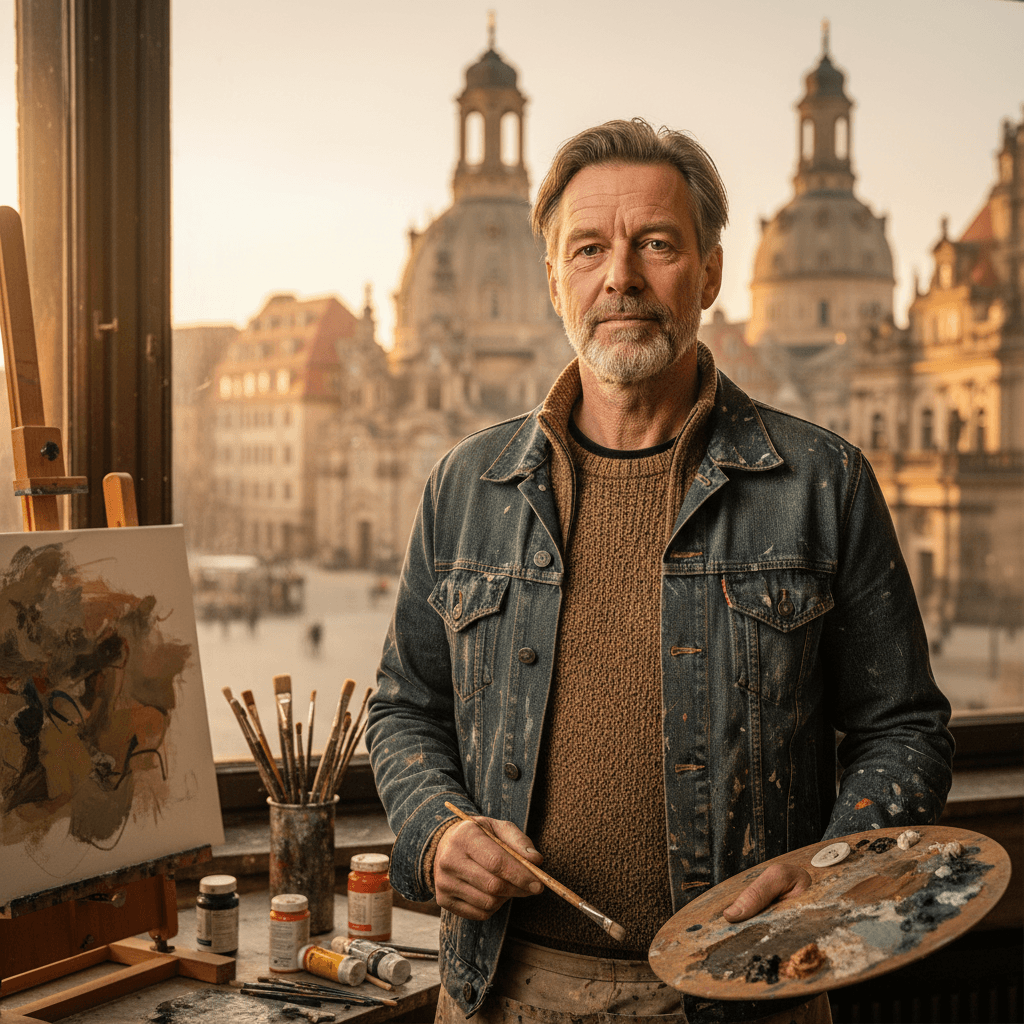
Maria(52)
Amsterdam → Dresden
For twenty years I had a studio at the NDSM wharf in Amsterdam-Noord. When the rent was raised for the fourth time — from €400 to €1,200 per month — I knew it was over. As a visual artist you don't earn a steady income, and Amsterdam had simply become too expensive. A friend who lived in Dresden invited me for an Artist Residency. After two months I knew: this is where I want to live.
Dresden is a hidden gem for artists. The Neustadt — the alternative part of the city — is bursting with galleries, studios and artist collectives. My studio in an old factory in Friedrichstadt costs €250 per month — including heating. My home, a spacious Altbauwohnung with high ceilings in the Äußere Neustadt, costs €550 warm. In Amsterdam I couldn't even rent a parking space for that money.
As a self-employed artist in Germany I discovered the Künstlersozialkasse (KSK) — a unique German system for creative professions. The KSK pays half of your health insurance and pension contributions, just as an employer would. You pay the other half yourself, based on your estimated annual income. For me that means €190 per month for Krankenversicherung and Rentenversicherung combined. In the Netherlands as a freelancer I paid €140 just for basic health insurance, without any pension accrual.
The Anmeldung as a Freiberufler (freelance profession) was different from employees. Artists in Germany fall under the Freie Berufe — you don't need to register a Gewerbe. I only had to register at the Finanzamt and fill in the Fragebogen zur steuerlichen Erfassung. As a Freiberuflerin I don't pay Gewerbesteuer (trade tax), only Einkommensteuer and Umsatzsteuer (VAT) if my revenue exceeds €22,000 per year. The Kleinunternehmerregelung exemption is a blessing for artists with modest revenue.
The art scene in Dresden is surprisingly vibrant. The Staatliche Kunstsammlungen — with the Gemäldegalerie Alte Meister and the Grüne Gewölbe — are world-famous. But it's the underground scene that draws me: the BRN (Bunte Republik Neustadt) is an annual street festival that lasts three days, and the Motorenhalle is a project space for contemporary art. I've already exhibited twice and sold more work than in my last five years in Amsterdam.
East Germany still has a particular image, and not always positive. There are neighborhoods where I get strange looks as a foreigner. But in the Neustadt everyone is welcome — it's an enclave of diversity in an otherwise conservative region. My German is now at B2 level, and I even speak a bit of Sächsisch. The dialect is notorious, but Dresdeners appreciate it when you make an effort. My advice: as a creative person Germany is a paradise. The KSK, affordable studios and government arts subsidies make it possible to live from your art.
Highlights
- Künstlersozialkasse (KSK) pays half of insurance and pension
- Studio in Dresden: €250/month vs. €1,200 in Amsterdam
- Freiberufler: no Gewerbe needed, no Gewerbesteuer
- Kleinunternehmerregelung: no VAT under €22,000 revenue
Other stories
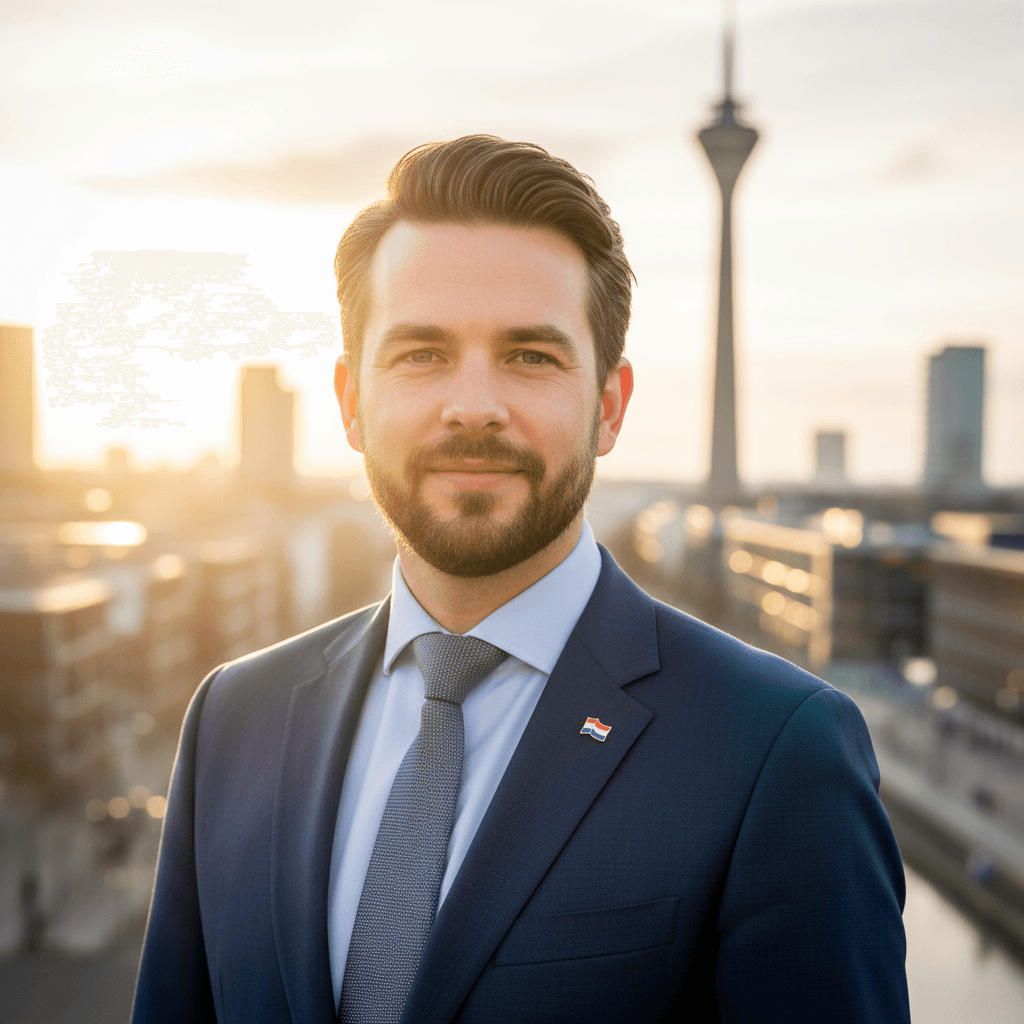
Marco
Venlo → Düsseldorf
As a nurse I had been commuting across the border for years. When I decided to actually move to Düsseldorf, the real paperwork began.

Niels
Amsterdam → Berlijn
Amsterdam rent prices drove me away. Berlin offered a startup job, an affordable apartment and a vibrant nightlife.
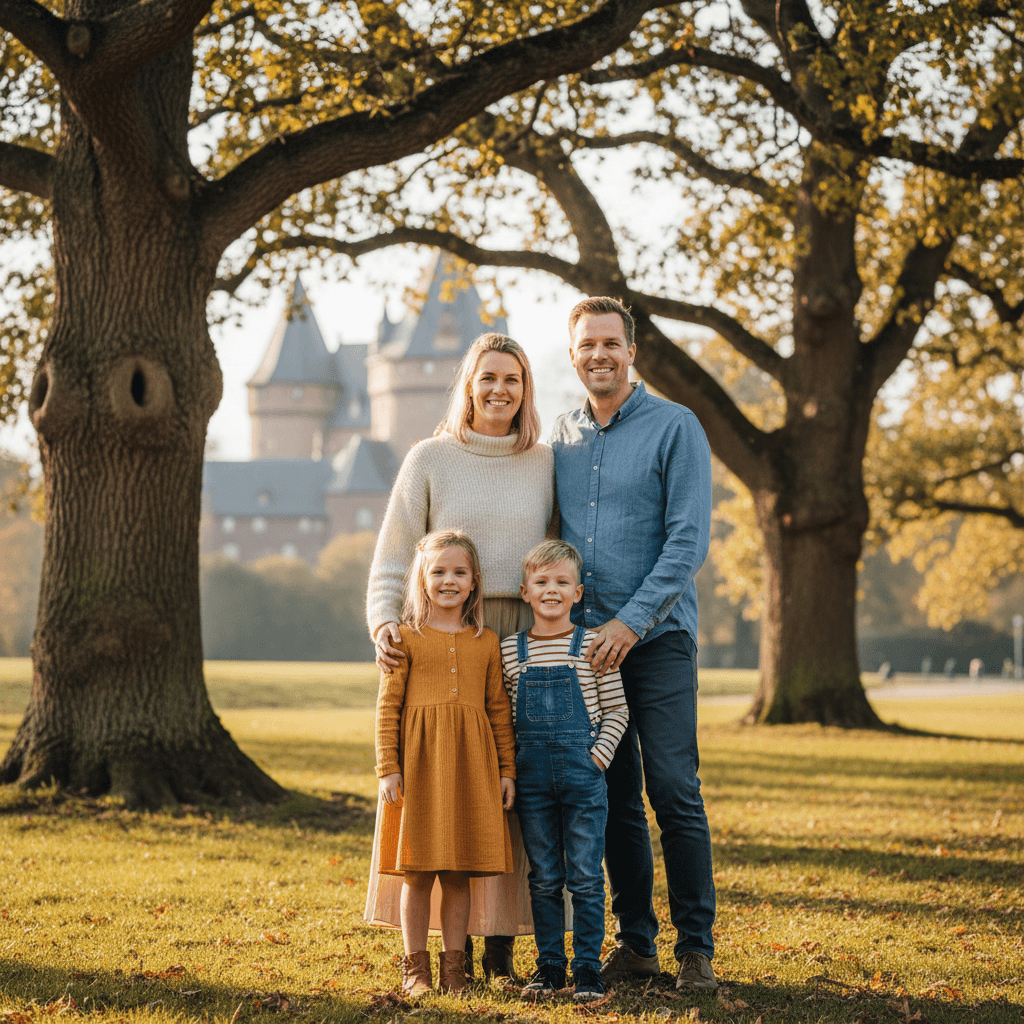
Dennis & Laura
Arnhem → Kleve
With three children we moved from Arnhem to Kleve. A bigger house, Kindergeld and a Grundschule around the corner — but the German school system took some getting used to.